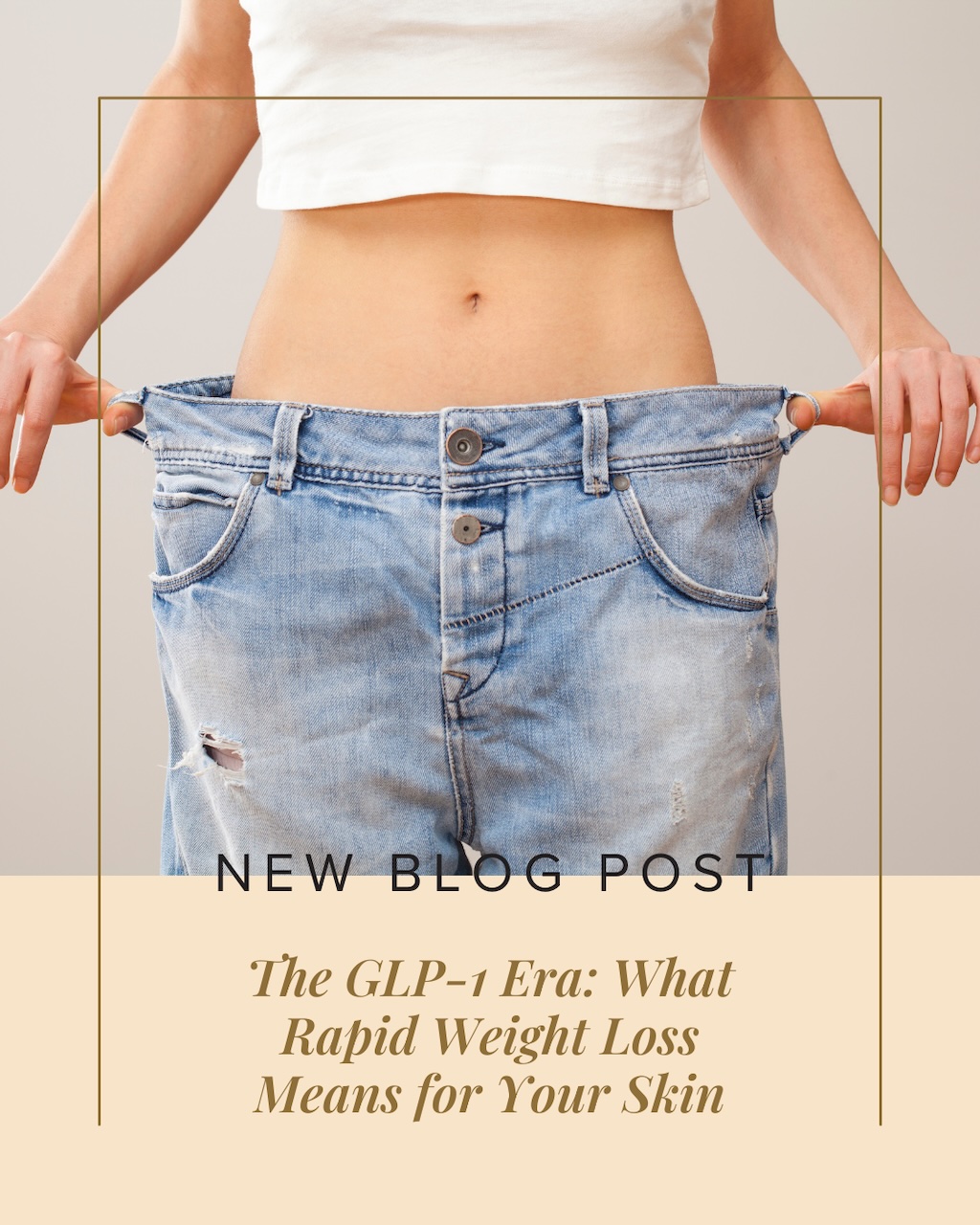
Medications such as Semaglutide and Tirzepatide have dramatically changed the landscape of medical weight loss. Many patients are achieving results that once felt impossible. While the health benefits of weight loss are substantial, rapid changes in body composition can also affect the skin, facial structure, and hair growth cycle.
As we are prescribing and seeing more patients on GLP-1 medications, one thing has become clear: weight loss is not just a metabolic journey—it is also a structural and aesthetic one. Supporting the skin and hair during this transition can make a significant difference in how patients feel throughout their transformation.
The face is supported by a complex network of fat pads, connective tissue, collagen, and muscle. When weight is lost quickly, fat compartments in the midface, temples, and jawline shrink. Because skin elasticity naturally decreases with age, the skin may not fully retract as volume is lost.
Patients commonly notice:
These changes are sometimes described in media as “Ozempic face,” but the reality is simpler: any rapid weight loss can reduce facial support structures. And also, regaining weight does NOT fix facial changes.
The goal of aesthetic dermatology in this setting is not to reverse weight loss—it is to support the face as it adapts to a healthier body composition.
Several in-office treatments can help restore or stimulate structural support in the skin during weight loss.
Biostimulatory injectables are one of the most powerful tools available. These treatments stimulate collagen production and gradually improve structural support within the skin. Over time, this can restore facial balance and prevent the hollowed appearance that sometimes accompanies rapid weight loss.
Dermal fillers may also be used strategically to restore lost volume in areas such as the cheeks, temples, or jawline. When placed conservatively, they help maintain natural facial proportions.
Energy-based treatments, including radiofrequency and laser technologies, can stimulate collagen remodeling and improve skin tightening. These treatments work best when combined with strategies that address deeper structural volume loss.
Because many patients on GLP-1 medications experience progressive changes in facial structure over time, our practice developed a program designed to support facial balance throughout the weight loss journey combining biostimulatory injectables, dermal fillers and energy based devices.
Secrets Sculpt and Shed is designed specifically for patients using GLP-1 medications who want to maintain facial structure as their weight changes.
The program includes:
• 1 vial of a biostimulatory injectable, filler, or laser treatment for every 15 pounds lost
• Up to 6 treatments per year
• Strategic placement to maintain facial balance and support collagen production.
This program allows facial support treatments to occur gradually alongside weight loss, helping the face adapt naturally as the body changes.
Another concern that some patients experience during rapid weight loss is hair shedding.
This type of hair loss is often related to a condition called Telogen effluvium. Telogen effluvium occurs when physiologic stress—such as significant weight loss, nutritional changes, or metabolic shifts—pushes hair follicles into the resting phase of the hair cycle.
Typically, patients notice increased shedding two to three months after the triggering event. Although this type of hair loss is usually temporary, it can be distressing. Dermatologic treatments can help stimulate the hair follicles and support recovery of the hair growth cycle.
Platelet-rich fibrin (PRF, exosomes and PDGF) treatments are commonly used to promote hair follicle activity. PRF uses a patient’s own growth factors to stimulate the scalp and encourage healthier hair growth. Exosomes use stem cell derived growth factors to stimulate growth. PDGF is a specific contracted growth factor to help with hair growth. Your provider can help you decide the best option for your scalp.
In addition, nutritional support and targeted supplements can help ensure that hair follicles receive the nutrients they need during periods of metabolic change.
Secrets Shed and Preserve Package is designed for patients who are starting or currently taking GLP-1 medications and want to proactively protect hair density during their weight loss journey.
Our program includes:
• 4 PRF/exosome/PDGF scalp treatments
• One year of Nutrafol supplementation
This approach supports hair follicles both biologically and nutritionally, helping to minimize shedding and encourage healthier regrowth.
Weight loss is often celebrated for its metabolic benefits, but it also represents a major physiologic transition for the body. Skin, facial structure, and hair all respond to these changes.
Rather than waiting until these changes become noticeable, proactive dermatologic care can help patients maintain balance and confidence throughout their weight loss journey.
The goal is not to fight the transformation—it is to support the body as it evolves.
When approached thoughtfully, medical weight loss and aesthetic dermatology can work together to help patients feel healthy, strong, and confident in their skin at every stage of the process.


.svg)
