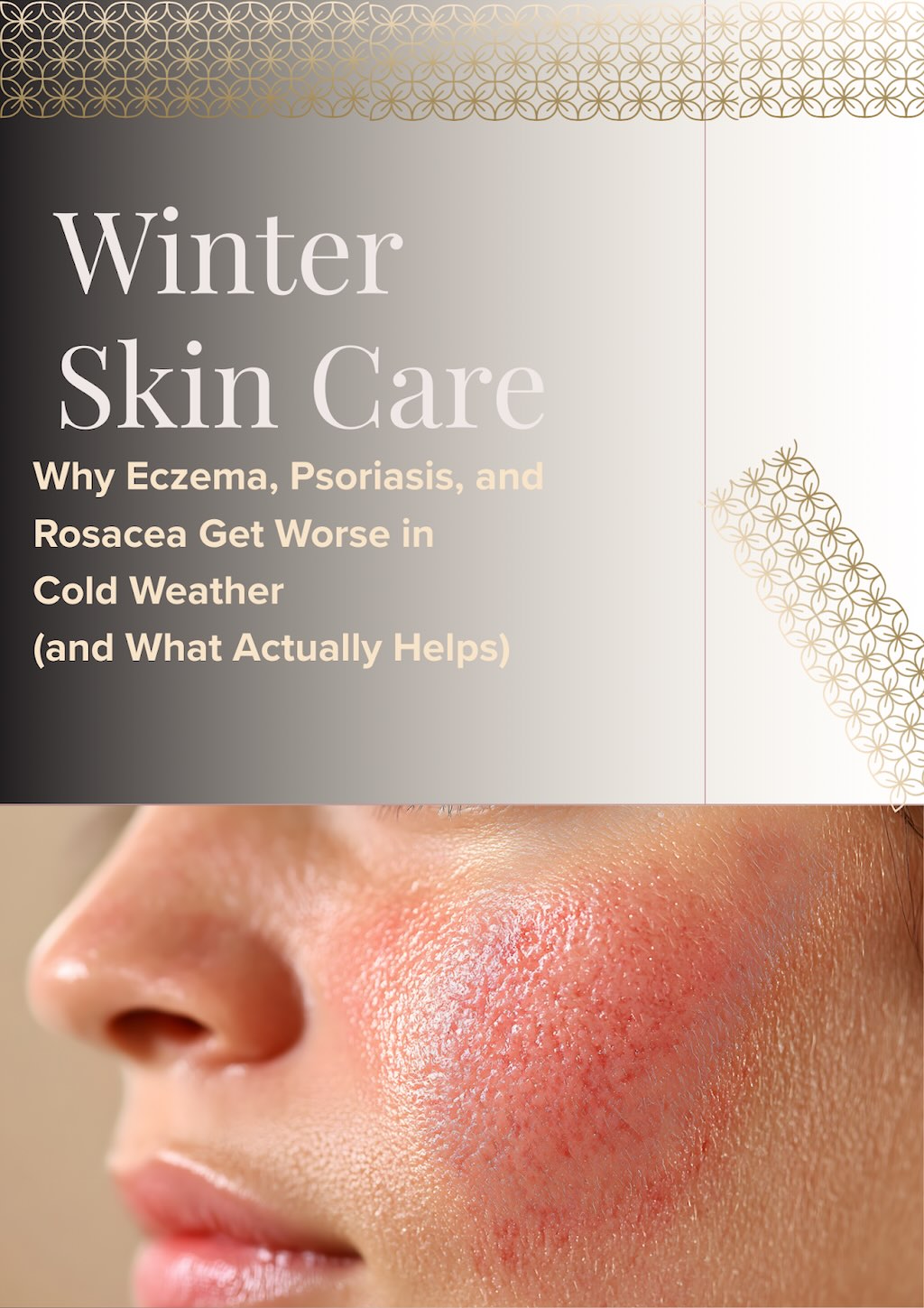
Winter can be brutal on your skin. If you notice your eczema flaring, psoriasis plaques thickening, or rosacea becoming more red and irritated during colder months, you’re not imagining it. These winter skin flares are common and predictable from a dermatologic standpoint.
Understanding why they happen, helps patients prevent worsening symptoms and seek treatment earlier, before flares become severe. Here are the top reasons to consider:
Cold air holds less moisture, and indoor heating further dries the air. This leads to: Increased transepidermal water loss (TEWL), compromised barrier function, and increased inflammation
When the skin barrier is weakened, inflammatory skin conditions flare more easily.
Long, hot showers may feel comforting but they remove protective lipids, worsen dryness and itching and exacerbate eczema and psoriasis.
This is one of the most common winter triggers dermatologists see.
UV exposure, while needing moderation, has immunomodulatory and anti-inflammatory effects. In winter, reduced UV exposure may worsen psoriasis, and vitamin D levels often decline, which can influence immune-mediated skin disease
Stress, poor sleep, and winter illnesses can trigger inflammatory cascades, worsen rosacea flushing and prolong flare duration.
If you experience:
With proper skincare, lifestyle adjustments, and targeted dermatologic treatment, eczema, psoriasis, and rosacea can be well-controlled year-round. If winter has taken a toll on your skin, a personalized dermatology plan can make a significant difference.


.svg)
