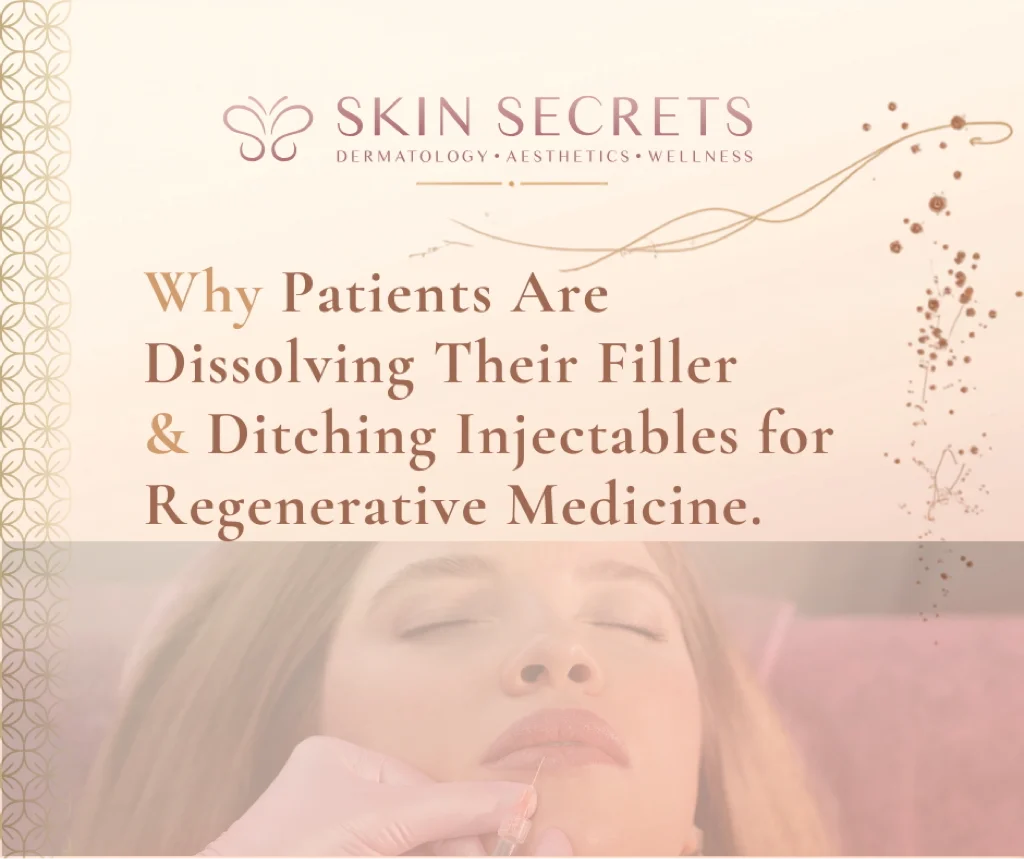
Remember when a "good" cosmetic result meant looking obviously done? Cheekbones that were high and round, a forehead that couldn't move, lips that preceded you into the room by a full second? When everyone started looking exactly the same after getting “ work done”. That era is quietly ending and it's not because Botox and filler stopped working. It's because patients decided they want something Botox and filler were never designed to give them: skin that actually gets healthier, not just skin that gets temporarily rearranged.
For the better part of a decade, aesthetics was an arms race of volume, more filler, more frequency, more freeze. But somewhere in the last 18 months, the conversation flipped. Patients aren't chasing the overfilled, artificial look they see flooding social media anymore. They want skin that looks like their skin, just better, not someone else's face grafted onto theirs.
The industry has a name for it now: "quiet luxury" skin, or the shift from skin architecture built by injection to skin architecture built by biology. Filler plumps a space. It doesn't ask your own collagen to show up and do the work.
This isn't a retreat from aesthetics, it's a redirection. Patients are still very much in the chair. They're just asking for treatments that repair and rebuild rather than fill and freeze:
A few threads are pulling at once:
Aesthetic fatigue is real. After years of watching filler migrate and freeze wear off unevenly on social media, patients are actively steering away from anything that reads as "done." The goal now is looking like the best, most rested version of yourself not a different person.
"Ozempic face" changed the conversation. As GLP-1-driven weight loss became mainstream, patients started dealing with skin laxity that volume alone couldn't fix. You can't fill your way out of skin that's lost its own structural integrity. That pushed the whole industry toward treatments that rebuild collagen and elastin from the inside, not just plump the surface.
Patients want wellness, not maintenance. The 2026 aesthetic patient isn't just chasing a look, they're chasing skin health, longevity, and sustainability, the same way they think about nutrition or fitness. A quick filler appointment doesn't fit that mindset the way a regenerative treatment plan does.
Time became the real luxury. Instead of stacking separate appointments for separate concerns, patients want fewer visits that do more, a single regenerative session addressing texture, tone, and firmness at once, rather than a filler touch-up followed by a separate texture treatment followed by another appointment entirely.
This isn't about abandoning injectables altogether, for many patients, the right approach is still a combination: a little structural support, layered with regenerative treatments that improve the skin itself over time. The shift isn't "never inject again." It's "stop treating injectables as the whole plan."
If your current routine has started to feel like you're chasing the same result every few months without ever actually improving your skin's underlying health, that's usually the sign it's time to have a different conversation, one about what's actually happening at the collagen level, not just what's happening at the surface.
Want to know what a regenerative approach could look like for you? Book a consultation and let's build a plan that works with your skin, not just on top of it.
This post is for general educational purposes and isn't a substitute for personalized medical advice.


